Shade Sails

Precision-engineered tensile fabric canopies - custom-fabricated to your exact site measurements, available in any shape, specified by curve percentage, and tensioned through a full marine-grade stainless steel hardware system. Built for commercial and institutional projects, not weekend retail.
  1. Custom-fabricated to exact point-to-point site measurements - no standard sizes, no approximations, no compromises.
  2. Commercial-grade HDPE fabric with up to 96% UV block and 10–15 year manufacturer warranties depending on the fabric specified.
  3. Fire-rated fabric options carry NFPA 701, CSFM 1237.1, and select ASTM E84-20 Class A certifications - for schools, healthcare, government, and any project with compliance requirements.
Overview

Custom tensile canopies. Not retail sails.

A custom shade sail is a tensioned fabric canopy - attached to posts, building walls, or other rigid anchor points and pulled taut through a precision stainless steel hardware system. Unlike the fixed-size product that shares the name at home improvement stores, a commercial shade sail is built from scratch for each site: its shape, span, curve profile, fabric specification, and hardware are all engineered to the project. The result, when properly designed and installed, is not just functional shade - it is an architectural element that holds its profile for a decade or more.

One distinction worth understanding up front: commercial HDPE shade cloth is breathable, not waterproof. Rain passes through the open-weave fabric rather than pooling on it, which eliminates the structural stress that builds up on solid canopies after heavy precipitation - and it keeps the space beneath the sail comfortable even on still, humid days by allowing heat and air to circulate freely. If your project requires enclosed rain protection, we specify different product categories for that. For open, ventilated, high-UV shading on a commercial property, a properly engineered shade sail is among the most effective and architecturally serious options available.

Built for the way the space actually gets used.

Built to your exact geometry

Every sail we fabricate is built to the exact point-to-point measurements of your site - taken after attachment points are in place. No standard sizes to approximate, no geometry that forces a compromise. Whether the footprint is a compact restaurant terrace or a sprawling school playground, the sail is designed and cut to match.

Shape freedom - far beyond triangles

Triangle, square, rectangle, hyperbolic twist (hypar), five - and six-point custom forms, and overlapping multi-sail compositions. The shape is a design decision, not a product-catalog constraint. Multi-sail arrays allow coverage of large or irregular footprints and create architectural depth that no single panel can achieve.

Full marine-grade stainless hardware

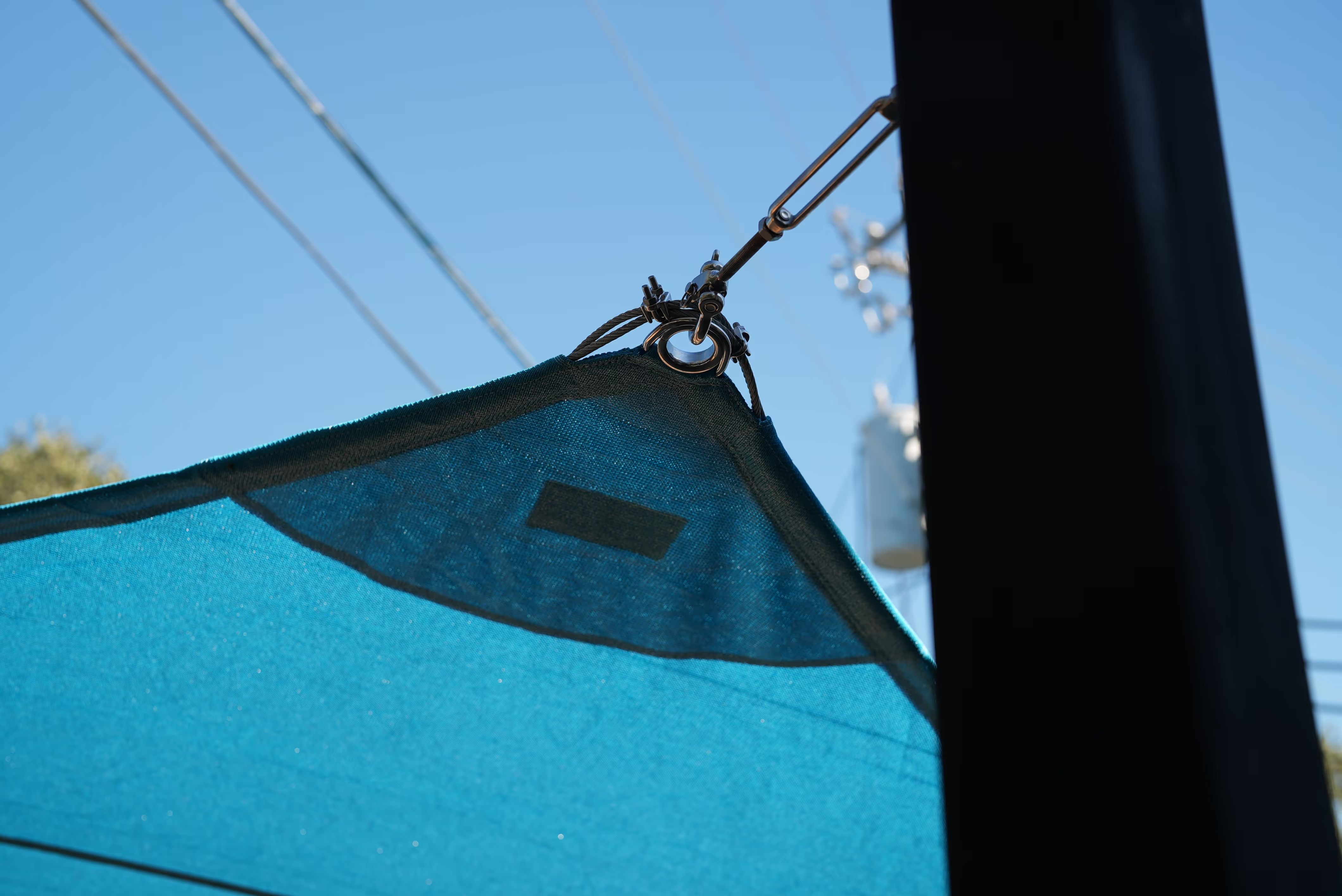
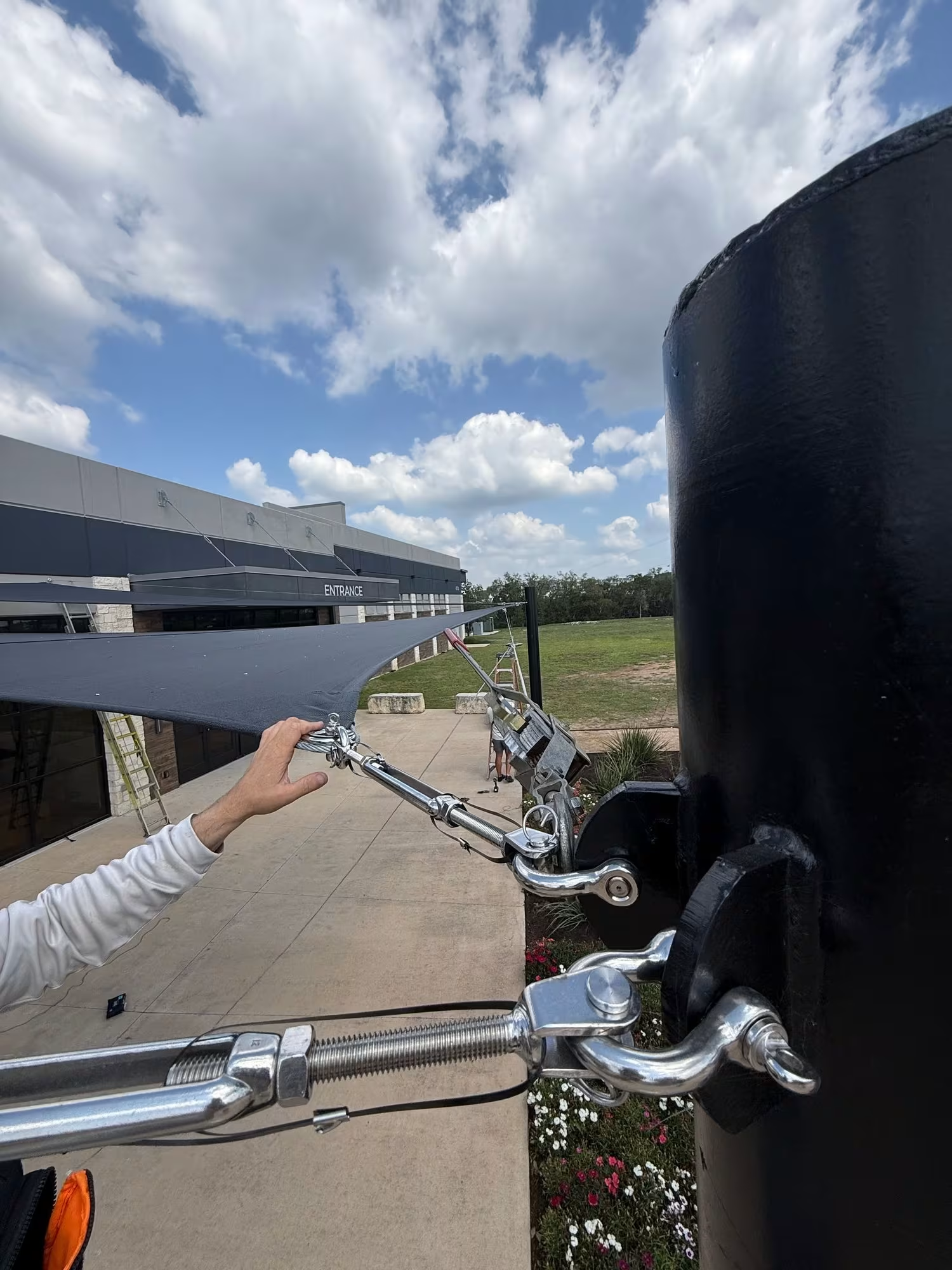
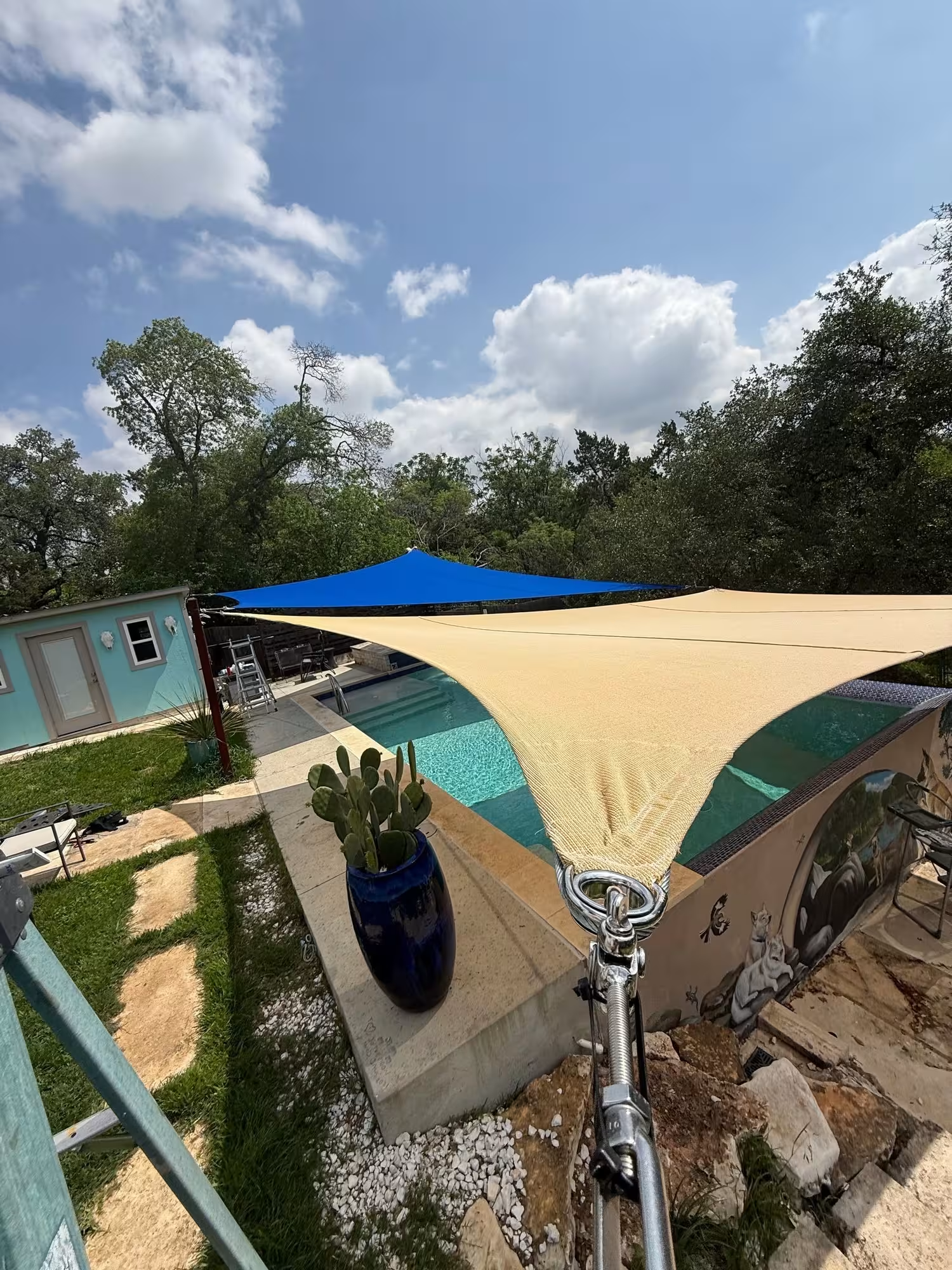
Every component in the tensioning system - shackles, turnbuckles, D-ring thimbles, cable, wall plates, eye bolts - is marine-grade stainless steel. Not decorative. Stainless resists corrosion across humid, coastal, chlorine-exposed, and high-UV environments and maintains structural integrity across the full service life of the fabric.

Commercial-grade HDPE fabric

UV-stabilized HDPE shade cloth engineered for commercial tension structures - not residential furniture, not awning cloth. Backed by 10–15 year manufacturer warranties. Available in mid-weight commercial tiers, heavy architectural grades (400gsm+ for extreme spans), dual-tone color fabrics, and fire-rated options. Up to 96% UV block on top-tier selections.

Specified curve - not an accident

Curve percentage - the degree to which each edge bows inward from a straight line - is a specified design variable on every sail. Higher curves produce a more pronounced dome profile with improved runoff and stronger visual form. Flatter curves read minimal and geometric. The profile is intentional, determined during design, and held through proper tensioning.

Institutional compliance, routine

Fire-rated fabric options carrying NFPA 701 (National Fire Protection Association), CSFM 1237.1 (California State Fire Marshal), and ASTM E84-20 Class A / Class 1 certifications are standard specification items we source regularly - not edge-case special orders. Compliance documentation is available for permitting and closeout on schools, daycares, healthcare, churches, and government projects.
Verified specs.

All specs verified against manufacturer documentation and our installation records.
  • System
    Tensioned fabric canopy · attached to posts, walls, or rigid structure via marine-grade stainless steel hardware · custom-fabricated to point-to-point site measurements.
  • Fabric
    Commercial-grade HDPE shade cloth · standard commercial, heavy architectural (400gsm+), dual-tone, and fire-rated options · UV-stabilized · 10–15 year manufacturer warranty depending on selection.
  • UV block
    Approximately 85–96% depending on fabric tier · documented certification data available on request.
  • Fire certifications
    FR-rated options available · NFPA 701 · CSFM 1237.1 · ASTM E84-20 Class A / Class 1 on select fabrics · compliance documentation provided.
  • Cable perimeter
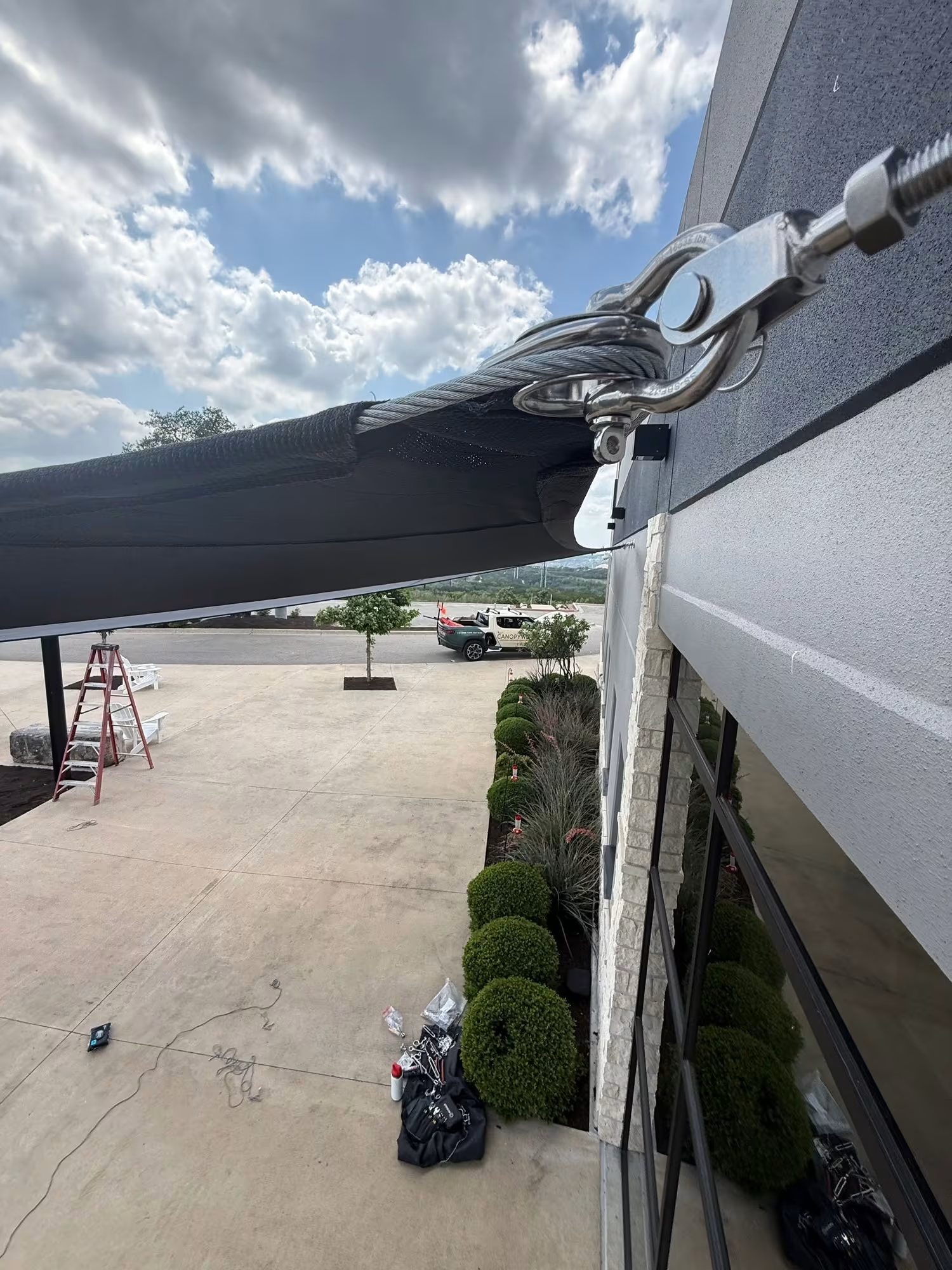
    7×19 aircraft-grade stainless wire rope in a 2" sewn pocket · used on any sail with a side exceeding 20 ft.
  • Webbing perimeter
    Heavy polyester webbing for smaller sails · cleaner finish, simpler install, requires precise initial measurement.
  • Corners
    Reinforced D-ring thimble hardware - combined D-ring and wire rope thimble - distributes tensile load and prevents cable kinking under sustained tension.
  • Seams
    4-row stitching · folded-over seam construction · prevents shark-fin seam distortion that lifts away under tension on lesser sails.
  • Tensioning
    Stainless turnbuckles at each corner · allow progressive tensioning to specified curve profile and re-tensioning over time as the fabric settles.
  • Curve specification
    Curve percentage specified per sail · determines the degree of edge bow · affects runoff, visual form, and structural behavior · chosen during design, not after.
  • Shape options
    Triangle · square · rectangle · hyperbolic/hypar · custom multi-point (5-, 6-, or more-point) · overlapping multi-sail compositions.
  • Color palette
    Over 20 colors per fabric line depending on tier · dual-tone fabrics offer distinct colors on each side for two-sided design expression.
  • Wide-format fabric
    Up to 12.5 ft wide fabric roll available - reduces or eliminates field seams on large sails where a seamless face is a design priority.
  • Hardware
    Marine-grade stainless steel throughout - shackles, turnbuckles, cable, D-ring thimbles, wall plates, eye bolts · rated for humid, coastal, chlorine, and high-UV exposure.
  • Engineering
    Site-specific attachment point specification · engineering review available on request for large or complex projects.
  • Warranty
    Fabric: 10–15 years manufacturer warranty depending on selection · hardware designed to outlast multiple fabric generations.
  • Starting price
    Fabric fabrication and Installation from $10/sq ft · does not include structural posts.

Best applications.

Playgrounds & schools

Playgrounds & schools

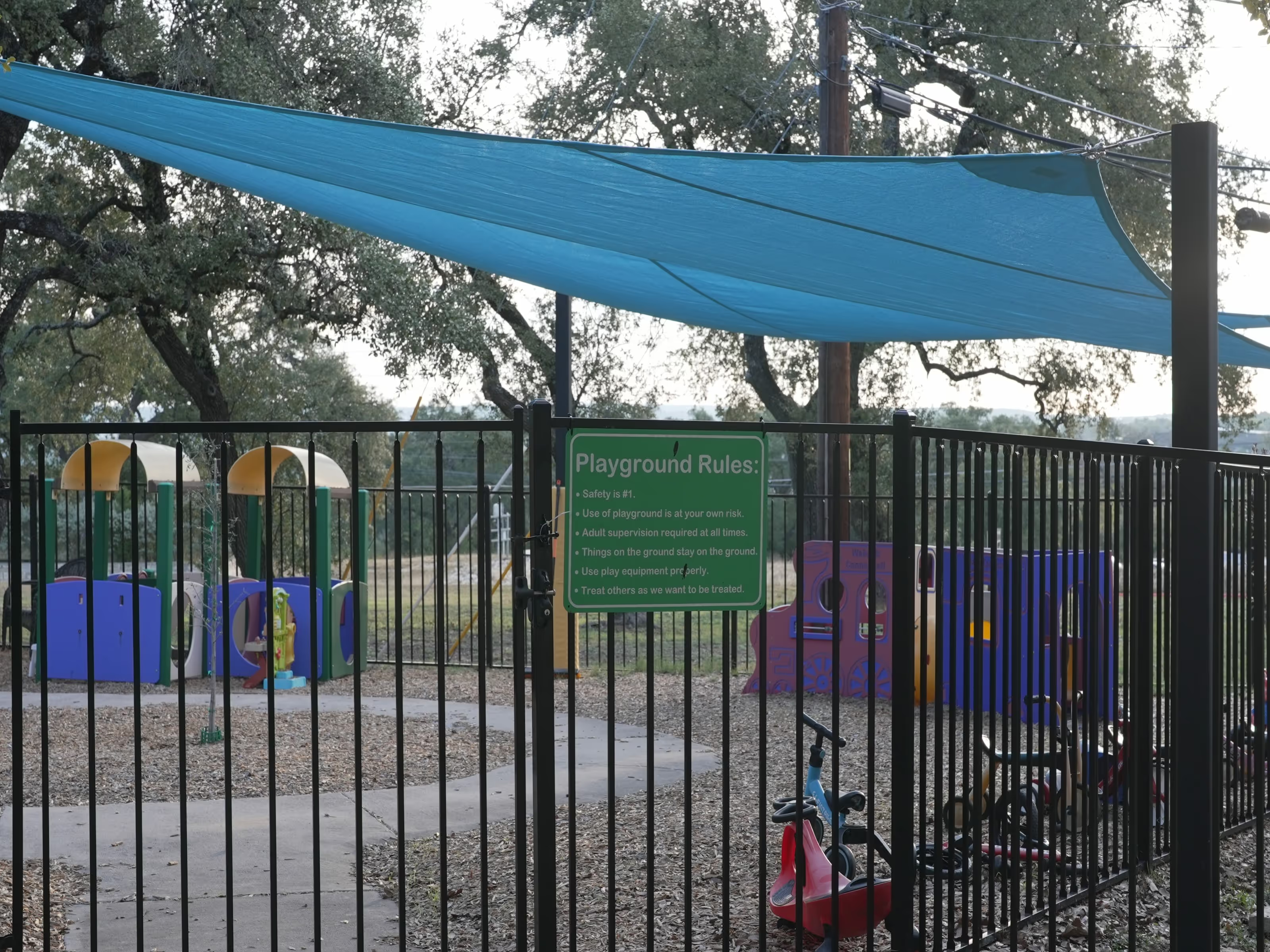
One of the most effective and widely specified shade solutions for campuses and childcare. Fire-rated fabrics meet institutional compliance, high UV-block ratings protect kids during the peak-UV hours, and multi-sail configurations cover playgrounds, lunch areas, and outdoor gathering spaces of any size or shape.
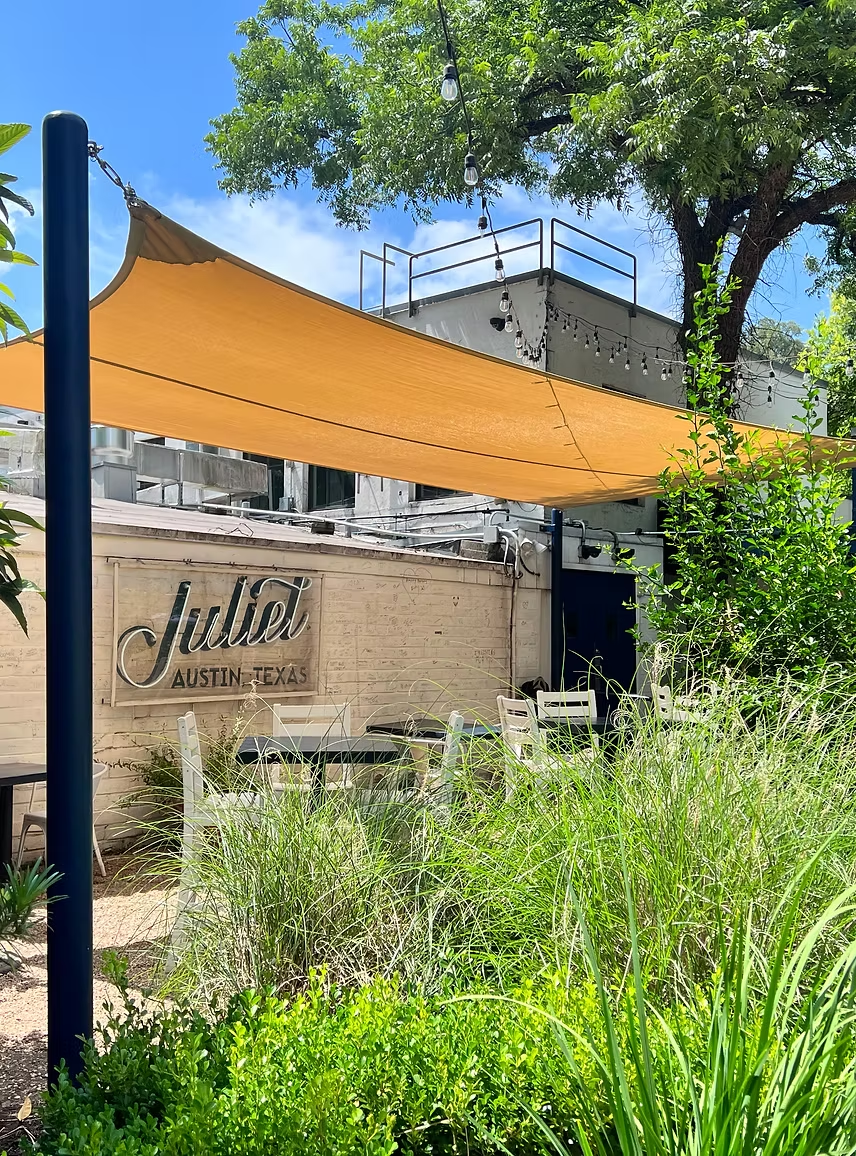
Restaurants & outdoor dining

Restaurants & outdoor dining

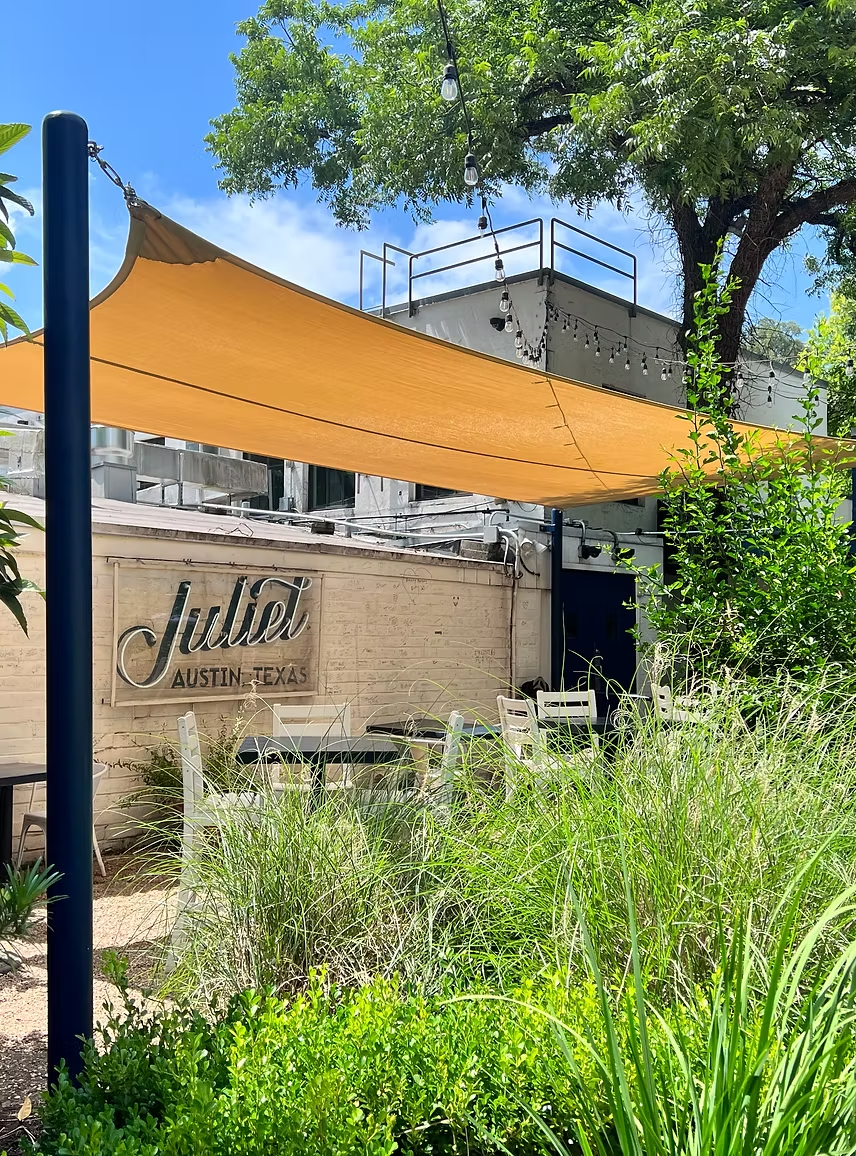
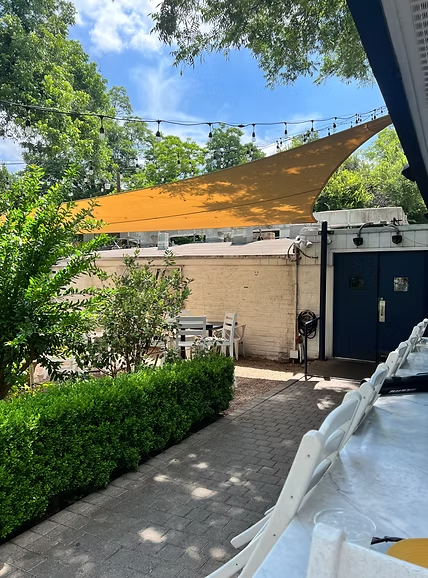
Covered outdoor seating without the visual weight of solid overhead structures. Open-weave fabric keeps air moving - essential for comfortable dining on still, hot days - and the design of the sail contributes to the ambiance. We work with operators to compose sails that integrate with existing architecture and brand aesthetic.
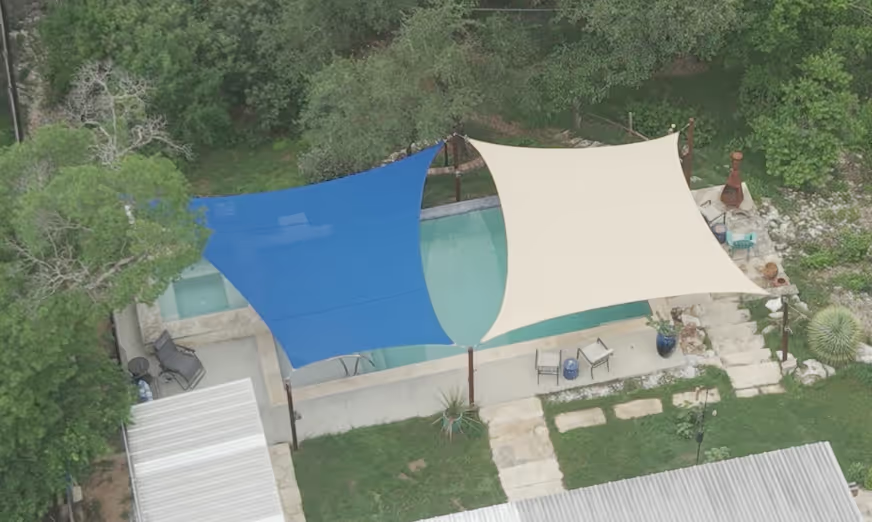
Pool decks & aquatic spaces

Pool decks & aquatic spaces

Pool environments demand shade that handles moisture, humidity, and chemical exposure without degrading. Commercial HDPE is resistant to these conditions; the full stainless hardware system is corrosion-rated specifically for them. Protects guests from UV while preserving the open, airy character enclosed structures can’t match.
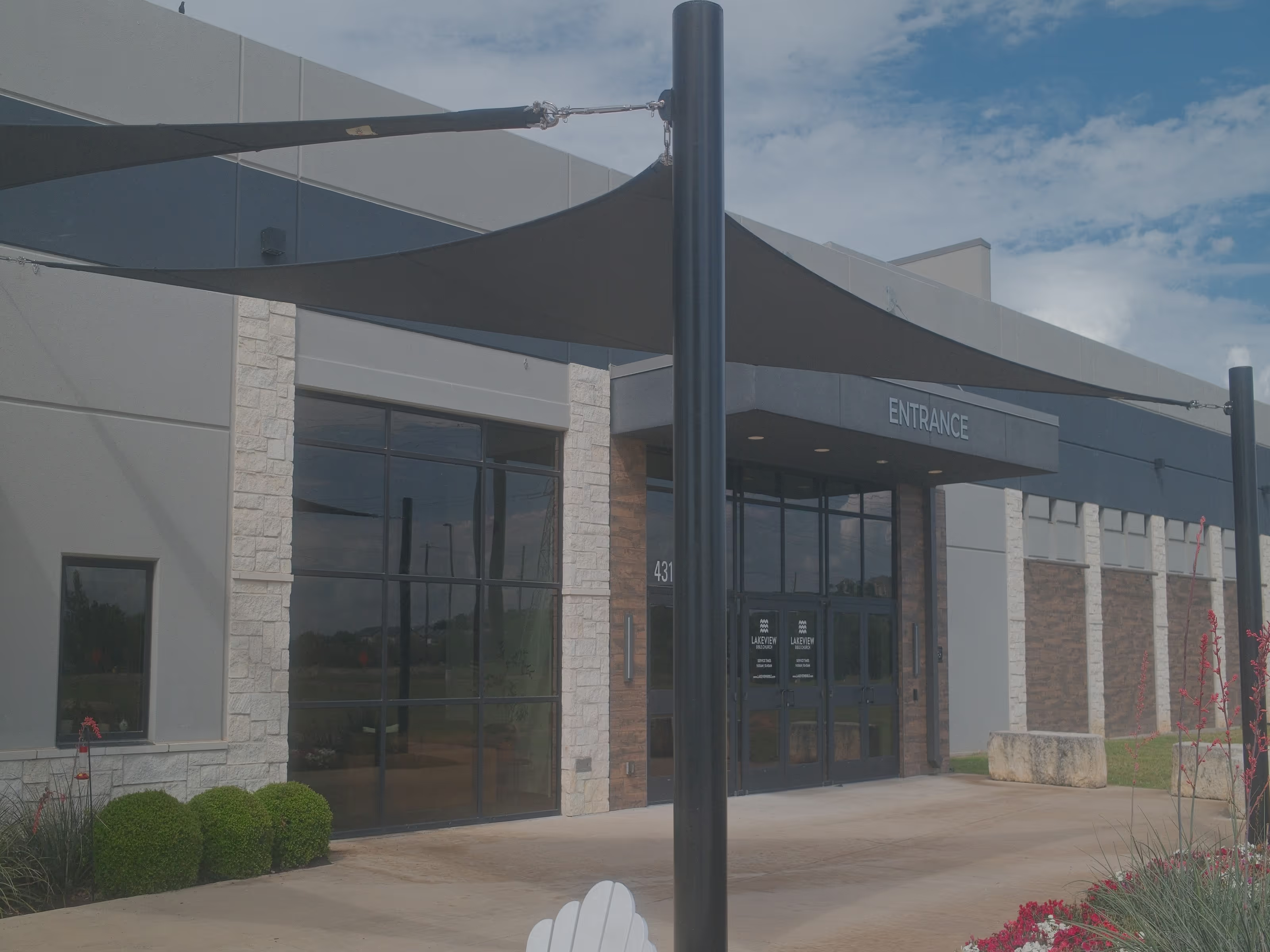
Courtyards & plazas

Courtyards & plazas

Urban courtyards, commercial plazas, and campus commons usually have irregular geometry and existing structural elements that make standard canopies impractical. Sails attach to walls, columns, and posts at whatever points are structurally appropriate - and multi-point configurations cover irregular footprints with precision.
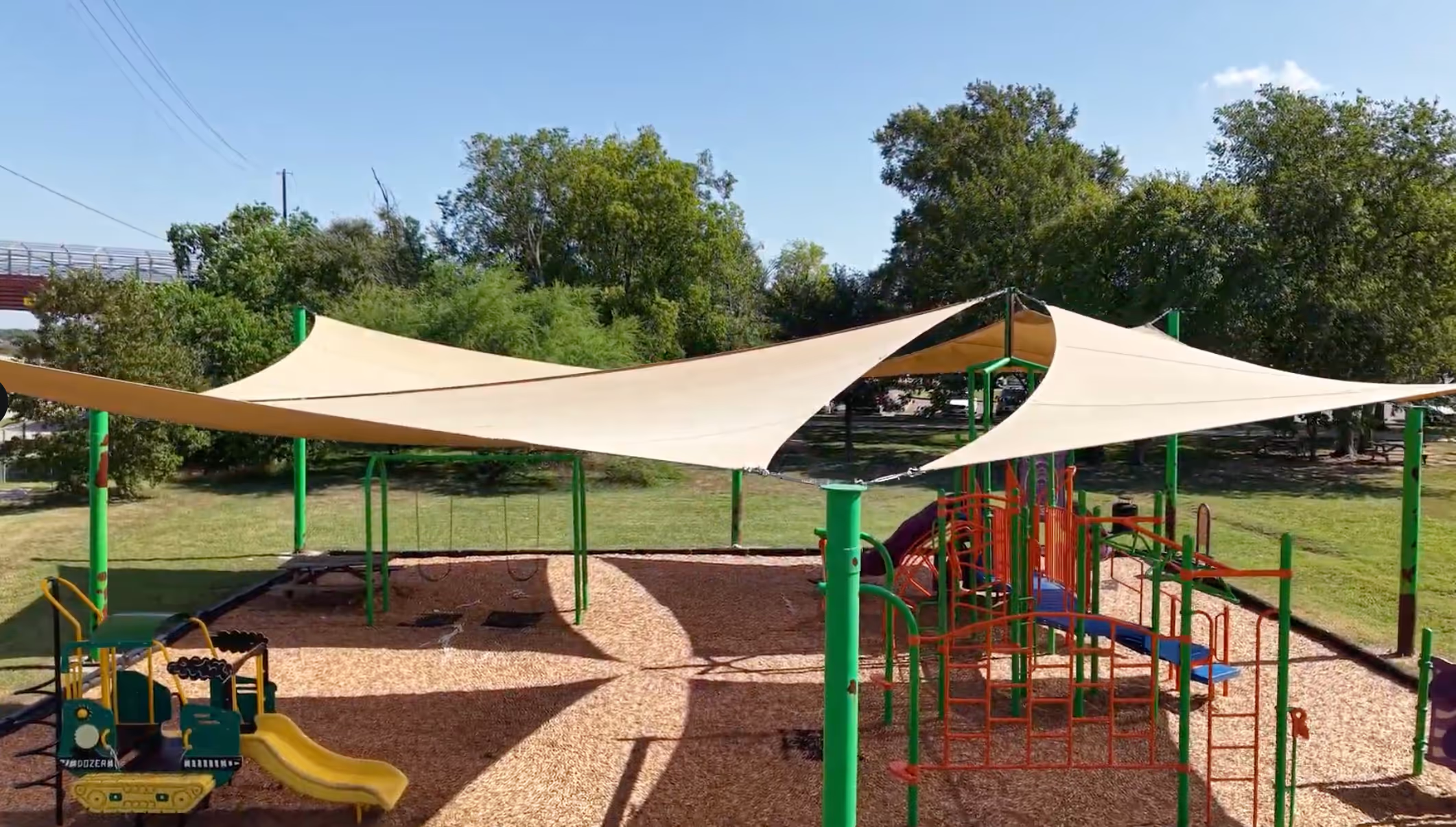
Parks, municipalities, & recreation

Parks, municipalities, & recreation

Trail amenities, sports viewing areas, and municipal recreation centers benefit from shade that withstands heavy use, UV exposure, and weather variability. Commercial HDPE fabric and properly tensioned cable construction deliver the durability these environments require.

Straight answers.

01

How is this different from a shade sail I can buy online or at a home improvement store?

Retail shade sails are manufactured in fixed sizes, sold with consumer-grade hardware, and designed for DIY installation. They use unrated fabric with no verified UV or fire certifications, zinc or galvanized hardware that corrodes within a few seasons, and they rely on the buyer to achieve correct tension - which rarely happens without experience. The result is typically the floppy, off-profile canopy the category is known for. A CanopyWorx sail is custom-fabricated to your site's exact dimensions, built from commercial-grade HDPE with documented warranties and certifications, hung on a fully stainless steel hardware system, and professionally installed and tensioned to specification. The difference is visible in the first season and compounds over the life of the installation.
02

Are shade sails waterproof?

No - and that is intentional. Commercial HDPE shade cloth is an open-weave, breathable fabric. Rain passes through rather than pooling, which eliminates the structural stress that builds up on solid canopies after heavy precipitation. The open weave also allows air to circulate freely under the sail, making the shaded space comfortable even on still, warm days. If your project requires rain coverage in addition to sun, we specify other product categories for that. For pure solar shading in an open environment, breathability is a meaningful performance advantage - not a limitation.
02

Can it be added to my existing pergola?

In most cases, yes. The cable system is compatible with existing wood, metal, or masonry pergolas, covered patios, and structural walls. We assess the structure during the site visit to confirm it can carry the cable tension. If it can’t, we build a freestanding aluminum frame that sits inside or alongside the existing structure.
03

Can a shade sail be custom-sized to fit my exact space?

Yes - every sail we fabricate is built to the exact point-to-point measurements of your site. There are no standard sizes we work from. Measurements are taken after attachment hardware is installed, ensuring the fabricated sail matches the actual geometry rather than an approximated dimension. This is the step that distinguishes a professionally specified installation from a DIY project.
03

Is it motorized?

No - this system is hand-operated by a pull cord at one end. The simplicity is intentional. No motors to burn out, no remotes to replace, no electronics to fail. The whole system is designed to last decades with the moving parts as simple as we can make them. If you want motorization over a pergola, take a look at our Retractable Pergolas (Corradi Palladia) instead.
04

What shapes are available?

Shade sails can be fabricated in virtually any shape: triangle (three-point), square or rectangle (four-point), hyperbolic / hypar twisted forms, and custom multi-point configurations (five-, six-, or more-point forms). Multiple sails in any mix of shapes can be combined into layered compositions to cover large or irregular footprints and create architectural depth that no single panel could achieve.
05

Are fire-rated fabrics available for schools, churches, and public facilities?

Yes. We specify fire-rated HDPE fabric options carrying NFPA 701 (National Fire Protection Association) and CSFM 1237.1 (California State Fire Marshal) certifications. Select options also carry ASTM E84-20 Class A / Class 1 ratings. FR fabrics are available in a range of colors and fabric weights - they're a standard specification option, not a special-order rarity. Full compliance documentation is available for permitting and project closeout.
06

How are they attached and tensioned?

The sail attaches to anchor points - posts, building walls, structural columns, or any rigid mounting structure - via a full marine-grade stainless steel hardware system: shackles, turnbuckles, D-ring thimble corners, and either a 7×19 aircraft-grade cable perimeter (sails with any side over 20 ft) or a heavy webbing perimeter (smaller sails). Turnbuckles at each corner allow progressive tensioning to the specified curve profile. They also allow re-tensioning over time as the fabric settles.
07

How long do shade sails last?

Commercial HDPE fabric carries manufacturer warranties of 10 to 15 years depending on the fabric tier selected. The marine-grade stainless steel hardware is designed to outlast multiple fabric generations. Actual service life depends on fabric selection, environmental conditions, installation quality, and maintenance - all of which we address through our specification and installation process.
08

Can you cover a large or irregular area?

Yes - cable perimeter construction handles large spans well, and multi-sail configurations allow coverage of virtually any footprint, irregular or otherwise. Overlapping triangles, layered rectangles, and mixed-shape compositions are one of the most effective tools for covering areas that no single sail could address. We design multi-sail compositions as part of the consultation process.
09

What does a project cost?

Shade sail fabric and fabrication starts at $10 per square foot for the sail itself, with pricing varying by fabric tier (heavy architectural and fire-rated fabrics are higher), shape complexity, hardware specification, and seam-minimization requirements. That figure does not include structural posts, attachment hardware installation, permitting, or the installation labor - those are priced after the site consultation. A commercial shade sail is a capital investment with a documented 10–15 year service life, not a seasonal purchase.
10

What does the CanopyWorx process look like?

Site consultation → shape and configuration design → attachment point planning and installation → precise point-to-point measurement → fabric and hardware specification → custom fabrication → professional installation and tensioning → project closeout with maintenance guidance and any compliance documentation required. CanopyWorx manages all of it. The outcome is a finished installation, not a kit that turned into your weekend project.
Ready for shade sails?

Your outdoor space, precisely shaded.

Site visit is free. We'll measure, talk through your site, and come back with stamped drawings.