LATEST
FIELD GUIDE
7 min read

What HOA boards should know before buying shade.

A field guide for the board members, property managers, and developers actually signing the check - not the glossy version, the trade version.

B

Bartlett Bell

Owner · CanopyWorx / Bartlett Sails & Canvas
Cantilever shade over sixteen guest parking stalls at a Southwest Austin community. 2022 install. Cabin temperatures measured about 30°F cooler than uncovered cars parked across the lot.
The short version

What is commercial HOA shade, and what should a board know before buying it?

It's a permanent, engineered fabric or steel structure - the kind that gets a permit and an engineer's stamp - installed over pools, playgrounds, parking, and common areas. Not a pop-up. Not a residential patio cover. Boards who buy well do three things before signing: they get the engineering first, they phase the project across fiscal years, and they pick a vendor who's still around to service what they installed. Budget roughly $15–45k for a single-area project; $60–150k+ for a pool-deck system.
You're on an HOA board or managing the property. Someone brought up shade at the last meeting. You're trying to figure out what a reasonable project looks like, what it should cost, and who to call. This is that post.

We've installed commercial shade at HOA pools, playgrounds, parking rows, and dog parks across Central Texas since 2017. Before that, the Bartlett shop was making sails for Lake Travis racers going back to 1984 - so the fabric side of this work has been in our hands for forty years. A lot of what we're about to tell you contradicts the shade industry's standard sales pitch. That's fine. The pitch is mostly wrong.

What "commercial HOA shade" actually means.

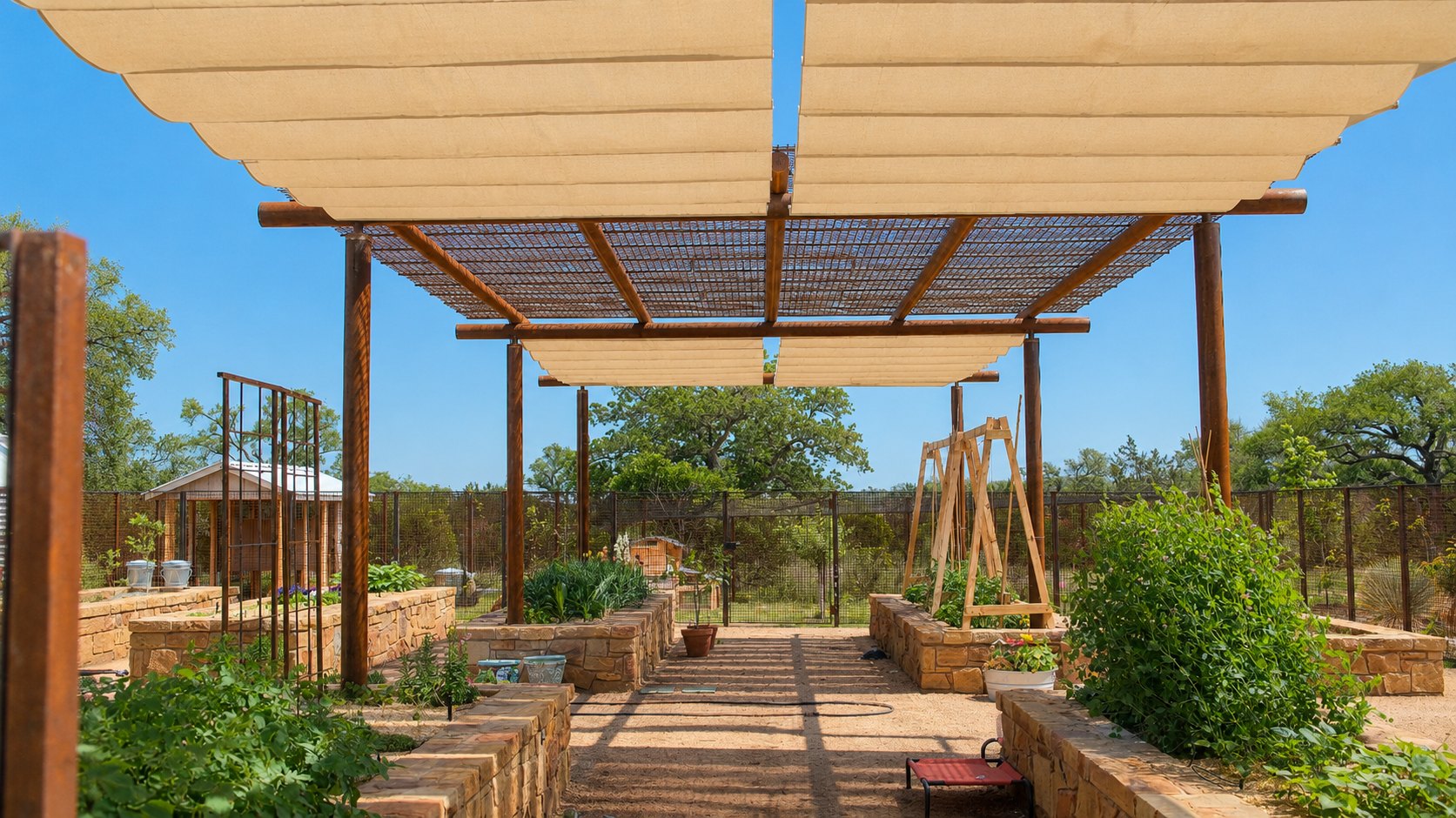
The phrase gets thrown around, so start here: an HOA shade structure is a permanent, engineered fabric or steel canopy installed in a common area. It has stamped drawings. It carries a wind rating specific to your city. A crew puts footings in the ground and tensions the fabric to those footings. Ten or fifteen years later, the fabric comes off and gets replaced; the frame stays.

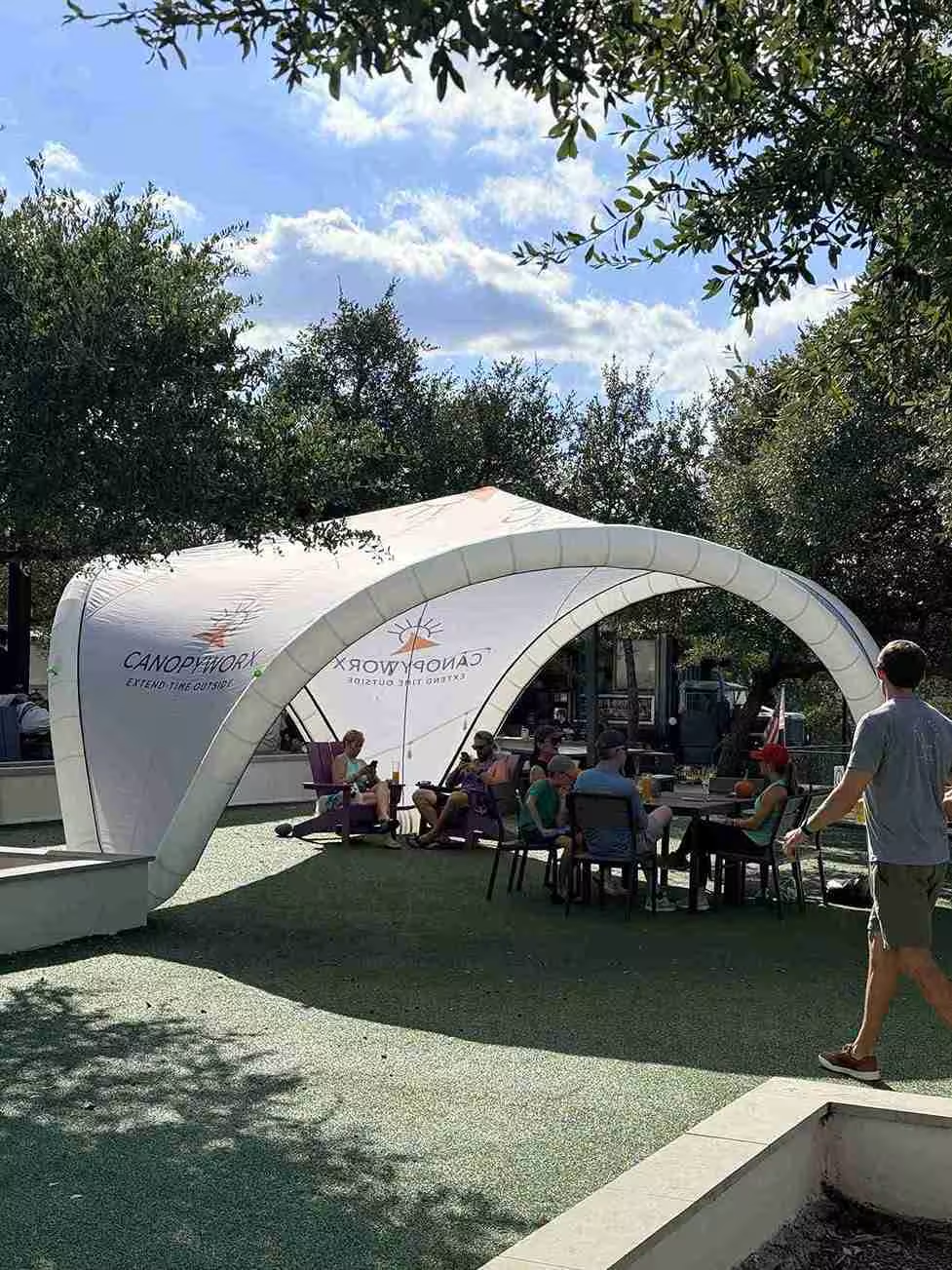
It is not a pop-up canopy. It is not a residential patio cover. It is not what Costco sells. The fact that the trade has to keep pointing this out tells you how many boards have been burned buying the wrong thing.

A 20×24 hip shade pavilion over sixteen lounge chairs at a 2015-built pool deck. Powder-coated steel frame, HDPE fabric panels. The frame will outlast three fabric replacement cycles.

The four areas boards actually shade.

Most communities have the same short list. We've worked every one of them. The honest read on each:

Pool decks and splash pads.

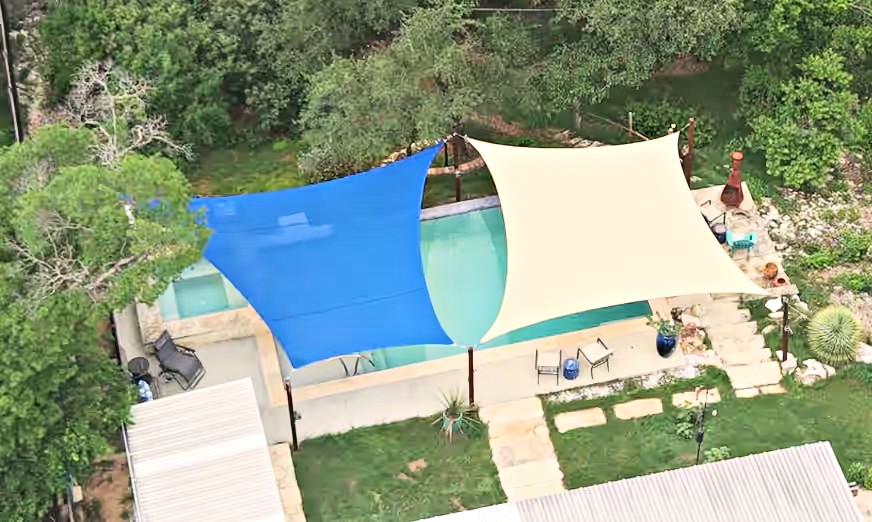
This is where boards get the most pressure from residents, and where the case is easiest to make. A shade sail over the lounge chairs is the single highest-impact project you can run. A 30×40 sail over a zero-entry pool area - the kind of thing that covers twenty-plus chairs - runs somewhere in the mid five figures installed. Less if the pool deck already has post locations; more if it's caliche and every footing needs drilling.

Playgrounds.

Surface temperature is the thing nobody mentions until an unshaded rubber playground surface burns a kid's hand in July. It can hit 150°F. Shaded, same surface reads 95-100°F. If the playground is newer than 2015, there's probably already a shade provision written into the HOA's own design standards - worth pulling before you spec the project.

Parking and EV stations.

Cantilever shade over guest parking and EV charging stalls is quietly the highest-ROI project on this list. A four-stall cantilever structure drops cabin temperatures about 30°F, saves vehicle paint from UV, and solves a resident complaint nobody knew how to fix. The only catch: cantilever structures need substantial footings to counterbalance the extended canopy, so the soil report matters more here than on a four-post hip structure.

Dog parks and BBQ lawns.

The honest answer is that these are lower priority than the first three. Shade at a dog park gets used, but nobody's filing a complaint over it. We'd spend the budget on the pool or the playground first, and come back to these in a later phase.

Posts located on one side, keeping the parking stalls completely clear underneath. Substantial reinforced footings counterbalance the overhang. This is the right structure for anywhere people walk through.

Three structure types. That's it.

Shade vendors will tell you there are dozens of options. There are, technically - but 95% of the HOA projects we bid fall into one of three buckets:

  • Hip-frame / pavilion Four posts, a rectangular roof, a clean architectural look. Good for seating, BBQ, and anywhere you want the shade to feel like a building. Typical span 20×20 to 24×36.
  • Cantilever  Posts on one side, canopy extends to the other. Keeps the shaded zone clear for circulation. The right call for parking, pool edge, sports sidelines.
  • Tensioned sail   Fabric panels stretched between steel posts at varying heights. Sculptural, modern, works over irregular footprints like freeform pools and playgrounds. More vendor skill required to detail correctly.

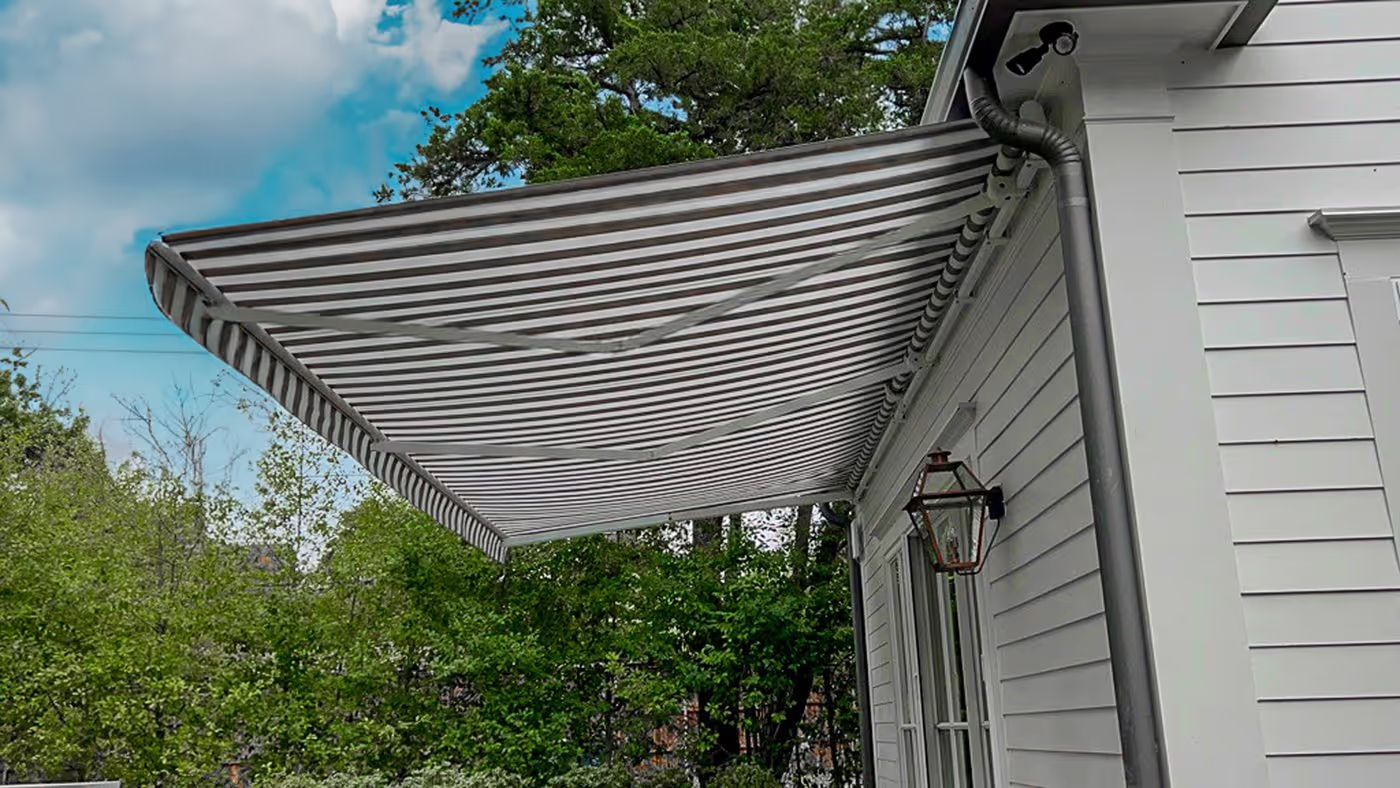
If a salesperson is pushing a fourth option - a hyperbolic sail arrangement, a retractable system, a custom one-off - make them tell you what specific problem the standard three don't solve. Usually there isn't one. Usually it's margin.

What a realistic project costs.

Pricing in this industry is opaque on purpose. We try not to do that. Rough ranges for 2026 in Central Texas, fully installed:

  • 12×12 sail  Around $8–14k. Tot lot, small seating area, or a reading nook. Single post-set.
  • 20×20 hip  Around $18–28k. Covers roughly sixteen lounge chairs or a BBQ pavilion.
  • Cantilever 4-stall Around $22–35k. Parking or EV charging. The footings drive the cost.
  • Multi-sail pool Roughly $50–120k. Freeform pool deck, multiple sails, multiple post heights.
  • Playground package Around $25–60k. One or two sails covering climbers, slides, and a seating area.


Anything much above these ranges, ask what's driving it. Anything much below, ask what's being left out. The two things that move a quote most are soil (caliche doubles footing cost) and fabric grade (commercial HDPE versus a residential-weight cloth that'll need replacing in five years).

The approval process, in plain terms.

This is where most HOA shade projects die - not at the bid, at the board vote. The sequence that works:

  • Three to six months of lead time. If you want the shade up by summer 2027, start the conversation in Q4 2026.
  • Two or three itemized quotes, not one. And not "the one our developer always uses."
  • Engineering and permits first, installation second. Stamped drawings, wind-load calcs, permit timelines of four to twelve weeks depending on your city. Your vendor should handle this.
  • Architectural or landscape committee review before the full board vote. Get the aesthetic fight out of the way before the money fight.
  • Written resident notification with specific meeting dates. Document each step; it protects the board from later complaints.
  • Certificates of insurance naming the association as additional insured. Non-negotiable.

Materials, and what actually lasts.

HDPE fabric is the commercial standard - high-density polyethylene, UV-stabilized, 8-12 oz per square yard. It blocks about 93% of UV (not 100%; nobody's blocks 100%), breathes so it doesn't trap heat, and carries a ten-to-fifteen-year manufacturer warranty.

The frames last longer than the fabric. Powder-coated or galvanized steel will hold for 25–30+ years with annual inspection. The fabric is a consumable - plan on replacing it once, maybe twice, over the life of the frame. For a 2026 install, budget your first fabric replacement around 2038 and schedule it in a fall or early spring window when contractors aren't slammed.

The frame was fine. Every bolt, every weld, every footing - fine. Every inch of stitching at the fabric corners needed attention.
- Observed on an eight-year-old YMCA sail we installed in 2017.


This is the thing nobody tells you: shade structures don't fail at the middle of the fabric. They fail at the corner hardware, the stitching at stress points, and the tensioning turnbuckles. When your vendor quotes annual inspections, that's what they're looking at. Anyone skipping the inspection program is skipping the work that makes the structure last.

How to pick a vendor.

The shade business has more franchises and drop-shippers than tradesmen. Here's how to tell them apart:

  • Do they sew the fabric themselves? If not, who does, and can you visit that shop? (We sew ours on Burleson Road. Visitors welcome.)
  • Can they walk you to a ten-year-old install? Not a photo - an actual site. If they can't, they haven't been in business long enough to service what they sell.
  • Do they have engineering in-house or on retainer? "We'll figure out the permit after contract" is a red flag.
  • Will they tell you what they don't do? A vendor who says yes to every request - retractable, hyperbolic, seasonal removal, custom everything - is pricing a lot of margin into the project.
  • Is the proposal itemized? Fabric line item. Frame line item. Footings line item. Engineering line item. Install line item. Permits line item. If it's one lump sum, ask for a breakdown.

A simple plan, if you're starting now.

  • This month Identify the one priority area - pool, playground, or parking. Photograph it. Measure the rough footprint.
  • Next 30 days Schedule two or three vendor site walks. Ask for itemized proposals, not lump-sum quotes.
  • 60–90 days Present options to the architectural committee. Narrow to one vendor, one structure type.
  • Q3 of this year Board vote. Resident notification. Engineering and permitting (allow 4-12 weeks).
  • Install Typically fall or early spring. Summer installs happen, but contractors are busy and lead times stretch.

Starting now means shade for summer 2027. Starting in May means shade for summer 2028. That's the calendar - not salesmanship, just lead times.

Good shade pays for itself in amenity use, in complaint volume, and in resale perception. The communities that install it don't think about it again for a decade. That's the goal.

B

About the author

Bartlett Bell & the CanopyWorx team.

Bartlett runs CanopyWorx, the shade arm of Bartlett Sails & Canvas. His father started the shop in 1984 making sails for Austin's Lake Travis racers. He writes Field Notes from the fabrication loft on Burleson Road.